
Introduction
Artificial intelligence has evolved rapidly over the past few years, introducing technologies that are changing how businesses, researchers, and individuals interact with machines. Two concepts that are often discussed in modern AI conversations are General Machine Intelligence (GMI) and Generative AI. Although both represent significant advancements in artificial intelligence, they serve different purposes and have different levels of capabilities.
Understanding the difference between General Machine Intelligence and Generative AI helps businesses and technology professionals recognize how these systems work, where they can be applied, and what the future of AI may look like.
What Is Generative AI?
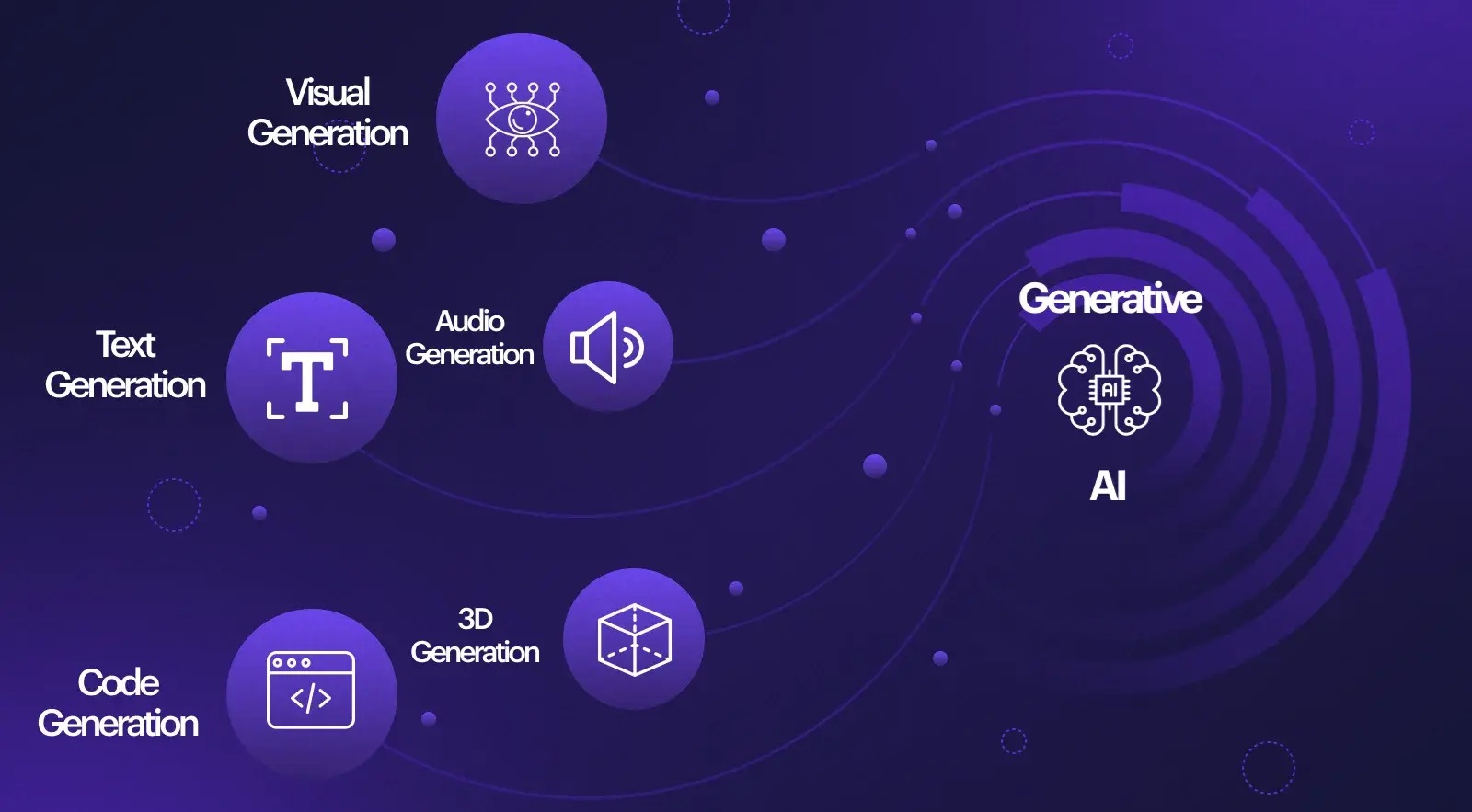
Generative AI refers to artificial intelligence systems designed to create new content based on patterns learned from existing data. These systems can generate text, images, videos, audio, software code, and other types of digital content.
Generative AI models are trained on large data-sets and use advanced machine learning techniques to predict and produce outputs based on user prompts or instructions.
Some common applications of Generative AI include:
1. Content Creation:
Generative AI can help create articles, marketing materials, product descriptions, and other written content quickly. It assists professionals by improving productivity and reducing manual work.
2. Image and Design Generation:
AI-powered tools can generate artwork, product designs, illustrations, and visual concepts based on simple descriptions.
3. Software Development Assistance:
Generative AI can support developers by creating code suggestions, identifying errors, and improving programming efficiency.
4. Customer Support Automation:
Businesses use Generative AI-powered chat systems to provide faster responses and improve customer interactions.
While Generative AI is highly effective at creating content, it typically operates within the boundaries of its training data and specific objectives.
What Is General Machine Intelligence?
General Machine Intelligence refers to a more advanced form of artificial intelligence designed to perform a wide range of cognitive tasks with greater adaptability and understanding. Instead of focusing on a specific function, GMI aims to develop systems that can learn, reason, solve problems, and apply knowledge across different areas.
Unlike traditional AI systems that are built for specific tasks, General Machine Intelligence aims to replicate more general human-like intelligence capabilities.
Key characteristics of GMI include:
1. Advanced Learning Ability:
GMI systems aim to continuously learn from new experiences and adapt to changing situations without requiring constant human intervention.
2. Problem-Solving Across Multiple Domains:
A general intelligence system could potentially apply knowledge from one area to solve challenges in another field.
3. Reasoning and Decision-Making:
GMI focuses on deeper understanding, logical reasoning, and making complex decisions based on available information.
4. Greater Adaptability:
Instead of being limited to predefined tasks, GMI aims to handle unfamiliar problems and environments.
Key Differences Between General Machine Intelligence and Generative AI
Although Generative AI and GMI are connected to artificial intelligence development, their goals and capabilities differ significantly.
1. Scope of Intelligence
Generative AI is designed for specific creative tasks, such as generating content or assisting users with information. General Machine Intelligence aims to achieve broader intelligence that can handle diverse tasks across multiple industries.
2. Learning and Adaptation
Generative AI models usually require extensive training before deployment and operate based on learned patterns. GMI focuses on continuous learning, adaptation, and improvement through experience.
Conclusion
As AI technology continues to advance, understanding the difference between these concepts will help organizations make informed decisions about adopting AI solutions and preparing for the future of intelligent computing.